
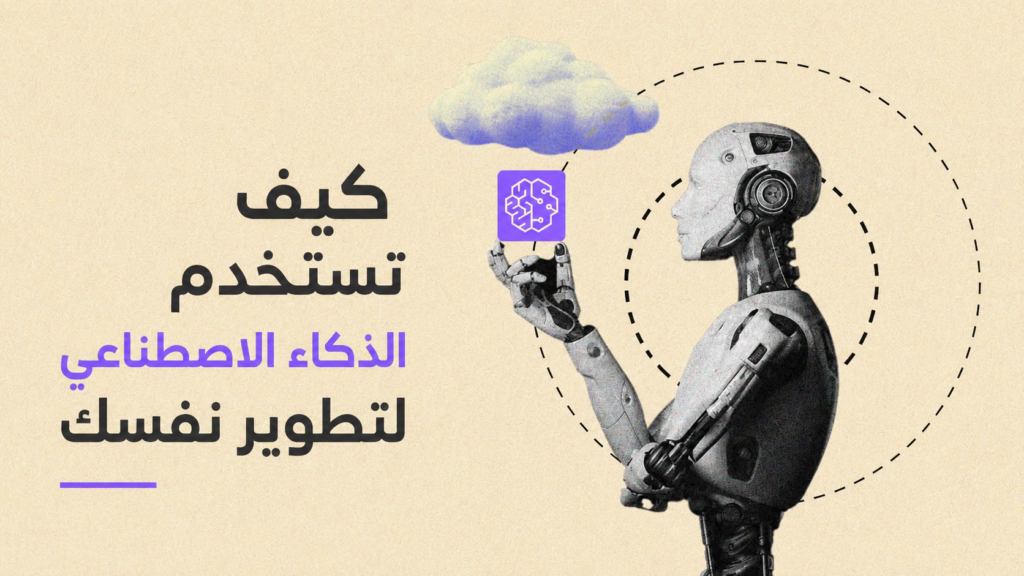
AI can shorten the distance between a question and a useful starting point. It can also make shallow work feel complete because a polished answer arrives before you have wrestled with the problem. Used carefully, it is a powerful development tool. Used passively, it can create the illusion of competence without the underlying skill.
AI is useful when it extends thinking rather than replaces it
Artificial intelligence is now part of everyday work: people use it to draft text, summarize material, generate code, compare options, plan projects, and explore unfamiliar subjects. The useful question is no longer whether to use it. The more important question is what kind of mental work you should keep for yourself and what kind of mechanical work you can delegate without becoming dependent on the tool.
A good rule is to keep ownership of the problem, the criteria, the final judgment, and the explanation. Let the tool accelerate search, variation, formatting, simulation, and feedback. If you cannot explain why an answer is good, where it may fail, or how you would continue without the model, the tool has probably done too much of the thinking for you.
Start with your own attempt before asking for help
Before opening an AI assistant, spend a few minutes defining the problem in your own words. Write what you already know, what is unclear, and what outcome you need. For a learning task, try to answer the question from memory first. For a writing task, make a rough outline. For a programming task, sketch the logic. This first attempt creates a baseline that lets you compare your reasoning with the model instead of simply accepting its first answer.
The goal is not to prove that you can work without tools. It is to prevent a subtle habit in which every moment of uncertainty triggers an immediate prompt. Productive struggle matters because it reveals the exact point you do not understand. Once that point is visible, AI can give much more focused help.
Use prompts that make the model teach, not merely deliver
Ask for explanations, questions, counterexamples, and feedback rather than only finished products. A useful learning prompt might ask the model to quiz you one question at a time, wait for your answer, then point out gaps without revealing the full solution immediately. For a professional skill, ask for a realistic scenario and practice making a decision before requesting critique.
- Ask the model to explain a concept at two levels: beginner and professional.
- Request three examples and one example that looks correct but is actually wrong.
- Ask it to challenge your conclusion and identify assumptions you may have missed.
- Use it to generate practice questions, then answer them without assistance.
- Ask for a checklist that you can later apply on your own.
Protect the skills that disappear when they are never exercised
If AI always writes your first draft, your ability to structure an argument may weaken. If it always summarizes long reports, your ability to extract evidence from difficult material may weaken. If it always diagnoses a coding error, debugging instincts may develop more slowly. The solution is not to avoid AI, but to deliberately schedule unassisted repetitions of the core skill.
For example, after using AI to study a topic, close the conversation and write a one-page explanation from memory. After receiving code suggestions, rebuild the key function yourself. After improving a presentation with AI, explain the storyline aloud without looking at the slides. These retrieval exercises reveal whether knowledge has actually moved into your own working ability.
Verify facts and separate confidence from correctness
AI systems can produce fluent answers that contain outdated, incomplete, or invented details. Treat confident wording as style, not evidence. For information that can affect money, health, legal rights, employment decisions, academic work, or public claims, return to primary or authoritative sources. When the answer includes statistics, regulations, product specifications, or current platform steps, verify them before acting.
Create a simple verification habit: identify the claims that would change your decision if they were wrong; check those claims first; record the source; and distinguish verified facts from suggestions or interpretations. This habit is more efficient than trying to verify every sentence equally.
Do not paste sensitive information without thinking about privacy
Professional development often involves resumes, company documents, customer data, contracts, unpublished research, or internal code. Before using any AI service, understand the organization’s policy and the service’s privacy controls. Remove unnecessary personal identifiers and confidential details. If a task can be discussed with abstract examples, use them instead of real sensitive records.
Privacy is part of professional judgment. The convenience of receiving a quick answer does not justify exposing information that you do not have the right to share.
Build a two-pass workflow: independent thinking, then AI review
A practical workflow is to divide each important task into two passes. In the first pass, create your own answer or plan. In the second, ask AI to review it against explicit criteria. This preserves agency while still gaining speed. You can ask: What is unclear? Which assumption is unsupported? What would a skeptical manager question? Which step is missing? What alternatives should I compare?
Then make the final changes yourself. Do not copy the review blindly. Decide which suggestions fit the real context and reject the rest. Over time, you will notice recurring weaknesses in your own work and can turn them into a personal checklist.
Use AI to widen options, not to choose your life for you
AI can help compare career paths, learning plans, or project ideas, but it does not know your values, financial obligations, energy, family context, risk tolerance, or long-term priorities unless you provide them—and even then it only models the information you supplied. Use it to surface possibilities and trade-offs, then make the decision yourself.
When considering a major choice, write your criteria before asking the model. Rank what matters, such as learning, income, stability, location, autonomy, or social impact. Ask AI to test the criteria and point out missing information. The final decision should remain traceable to your priorities rather than to the authority of a generated answer.
Measure whether AI is making you more capable
The best indicator is not how fast you finish while the tool is open. Ask what you can now do when it is closed. Once a week, perform a short no-AI test on the skill you are developing. Write, solve, explain, design, or plan from a blank page. Compare the result with previous weeks. If independent performance improves, the tool is supporting learning. If it stays flat while dependence rises, change your method.
- Can I explain the key ideas without looking at the conversation?
- Can I identify an incorrect answer from the model?
- Can I start the task on my own?
- Can I justify my final decision with evidence?
- Can I reproduce the core method under time pressure?
A simple weekly routine
Choose one skill for the week. On the first day, define the skill and complete a baseline attempt without AI. During the week, use the model for examples, feedback, simulations, and targeted explanations. Keep notes on errors you repeatedly make. At the end of the week, repeat a similar task without help and compare the result with the baseline.
This turns AI from a constant answer machine into a structured coach. The objective is not to minimize tool use. It is to ensure that every week leaves you with more knowledge, better judgment, or stronger output quality that belongs to you.
Common failure modes when learning with AI
One failure mode is accepting the first answer because it sounds polished. A second is using AI to remove all desirable difficulty from learning. A third is collecting hundreds of generated notes without practicing recall. A fourth is asking vague questions and then blaming the tool for generic output. A fifth is allowing the model to make value judgments that should remain yours.
The correction is simple: define the decision, attempt the task, ask focused questions, compare answers, verify important claims, and finish with an independent output. If your final artifact cannot survive without the conversation that created it, you may not have converted assistance into skill.
Practical conclusion
Use AI to accelerate feedback, expose blind spots, generate practice, and reduce mechanical work. Keep the difficult human responsibilities: defining the problem, choosing the criteria, verifying important claims, understanding consequences, and explaining the final decision. The healthiest relationship with AI is one in which the tool becomes more useful as your own judgment becomes stronger.
How this page was prepared and when it is reviewed
Method: The article turns a career question into a practical method, gives concrete examples, and preserves source links for facts that can change.
Review trigger: Revisit the decision when new evidence appears or a core condition changes.
For changing information, check the original source before making an important decision.
Sources and verification
Last checked: 2026-08-19- Official sourceMicrosoft Learn – Career pathslearn.microsoft.com
- Official sourceCareer Path Service – HRDFhrdf.org.sa
- Official sourceCareer Guidance (Subol) – HRDFhrdf.org.sa
Sources support the framework and reference data; professional application varies by organization, situation, and date.

The Mahana editorial team reviews career articles, guides, links, and time-sensitive information under the published editorial policy.
Editorial and verification method